Interview with 80s Rock Photographer Richard Fuscia
 | |
|
By Mick Michaels
CV: What do you remember most about that time, especially the ’80s?


Bill Hague, who owned the Galaxy, would even let me do photo shoots there when nobody else was around. He would set up the stage, and the stage lights were already in place. He would also turn on the smoke machine.
CV: Did you have to direct the bands during the photo shoots, or did they already know what to do?
CV: Tell us the story about how you got the call to work on Cinderella’s “Shake Me” video shoot.
CV: You were getting press passes to the Spectrum and other major venues, photographing not only local bands but also established acts. Your work was appearing in magazines. What was that like?
CV: Did you see the changes beginning through your camera lens as the 1980s came to an end?
I went backstage and saw the difference between their setup and the lavish backstage arrangements at the Spectrum. At the Spectrum, there might be tables full of food, beer, and sandwiches. With Timbuk 3, there was one bucket containing perhaps three beers, a plate of food, and a loaf of bread.
Rich: For me, it was the best time of my life. It was so much fun seeing bands almost every night of the week. If you wanted to go out, you could always find a good band, and for some reason, they all seemed to be really good.
There were so many great bands in the area.
That’s what I remember most, and that’s how I got started—by going to see bands. Then I decided to start taking photographs because I had recently taken up photography as a hobby. That was basically how it began.
I mostly photographed local bands, especially when Cinderella and Britny Fox were starting to become popular. Before that, I used to see local bands, but I didn’t have a camera yet.
| Photo by Richard Fuscia. Design by Rockstar Designs |
CV: So you were a music fan first.
Rich: Definitely. I was a music fan first. One day, I picked up a camera. A friend of mine had a father who was a newspaper photographer, and my friend used to take pictures. I liked the idea, so we would go into his darkroom and work on photographs.
For my first few concerts, I shot in black and white so we could develop the pictures in the darkroom. After that, I moved into color. The first concert I photographed was Jethro Tull.
CV: Did you find the bands receptive to you taking their pictures?
Rich: Yes. Once I got involved—especially with Cinderella, Britny Fox, and the other local bands playing the Galaxy—I would take photographs and show them the results. They always liked them and would say, “Rich, take more pictures.”
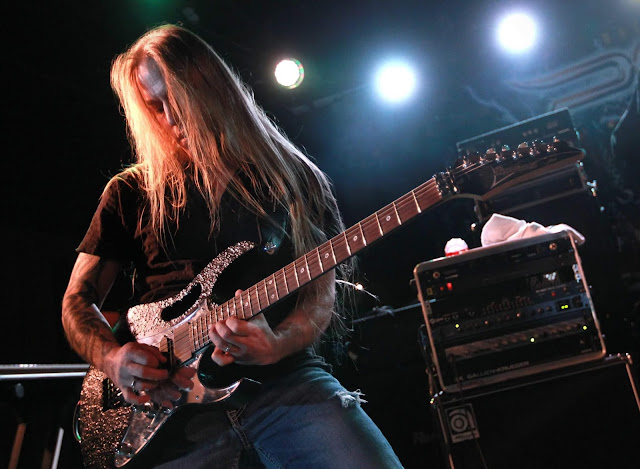
I started taking group photos of the bands because the Galaxy was a difficult place to shoot live. There was a strange, low beam near people’s heads, so it wasn’t an ideal venue for photography. I did take backstage photos there, though.
|
Bill really liked me and let me do whatever I wanted. I could bring bands in, meet them at the club, and take photographs using the smoke and the stage lighting. It was a great opportunity, and he helped me a lot.
Once I started going there regularly, they also began letting me in for free. I don’t know why they did that at first—I wasn’t a well-known photographer—but Bill and I got along well. We became friendly, and he was a really nice guy.
CV: Were the bands paying you, or was it more informal than that?
Rich: I was paid for some of the photo sessions. If a band needed a new publicity photo or wanted pictures for a CD, I might charge around $100. It wasn’t a lot of money, especially since I had to buy the film and have it developed, but I charged them a little bit.
I knew they weren’t rolling in money. They were working bands, and I was happy to help them. If they called me specifically for a photo shoot, I would usually charge them. But when I was backstage at the Galaxy, I would simply ask, “Can I take a few pictures of you before you go on?” They usually liked doing that.
One of the first Cinderella group photos ever published was one of mine. It appeared in Metal Edge magazine. They were all wearing shirts that had been sent to them by a woman from the magazine—I think her name was Jerry Miller. They were all wearing the shirts that night, so I took a photograph and sent it to her. She published it the following week. Once that happened, all the other bands at the Galaxy wanted me to do things for them. It seemed almost magical.
I knew there was a good chance she would publish the photo because Cinderella was wearing the magazine’s shirts. I don’t even think they had been signed at that point, but everyone knew they were going to be. They were probably the biggest band in the area then, and people kept saying, “They’re going to get signed.” It was a great story.
 | ||
|
CV: Did you have to direct the bands during the photo shoots, or did they already know what to do?
Rich: I mostly worked with what they were wearing. If two people were dressed in black and two were wearing white, I would separate them so the colors didn’t all appear next to one another. I tried to arrange the group in a way that looked balanced.
I thought I had a good eye for that, so I would move people around based on what I thought would look best. The bands listened to me, but most of them were already prepared for photographs. They practiced their poses and had all kinds of poses ready. It was pretty funny, but it was also great that they cared about getting good pictures.
Usually, they did well. The main thing was making sure nobody closed their eyes.
Because I wasn’t wealthy, I couldn’t take endless photographs. I tried to make every shot count. It wasn’t like today, when you can hold down the button and take a hundred pictures. Back then, you had to take one photo, reset the camera, refocus it, and compose the next shot.
It was more difficult, but it was fun. I always enjoyed taking backstage photographs. For a photographer, those were often the most valuable images. If you had a good group photo of the entire band backstage, it was much easier to sell.
Later, when I started getting legitimate photo passes at the Spectrum and other concerts, I knew that a good backstage photograph might end up in a magazine. That was what the publications really wanted, although they liked live shots too. The group photos were always special.
CV: What made a good group shot?
Rich: Usually, it was a photograph taken backstage before the band went on. Sometimes there would be a curtain, and I would stand behind it with the band, take a few pictures, and then jump through the curtain into the photo pit.
I did that with W.A.S.P. and a few other bands. I might be backstage with them while they were getting ready, and if I saw a good location, I would say, “Let’s stop here and take a photo before I go out there.”
They would usually agree. With W.A.S.P., there were ropes hanging down from the stage, and they posed right in front of them. It looked really cool.
 |
| Rich with Pat Travers |
Rich: That was after they got signed. I had probably done a few photo assignments for the record company, and since I was based in Philadelphia, they decided to use me instead of sending someone down from New York. They may also have heard that I was cheap.
I don’t know exactly how it happened. Maybe the band recommended me. Someone probably said, “We have a photographer down here who can do it.” In any case, they asked me to work on the shoot, and I got paid for the day.
It wasn’t a lot of money, but I wasn’t doing any of this primarily for the money. I did it because I enjoyed working with the bands. I was a house painter during the day—I worked for my father, who was also a painter—so that was how I made my living. Whatever I earned from photography was extra. It was a bonus, and it was fun. It was a really enjoyable time.
CV: You took the photograph of them coming out of the poster, right?
Rich: Yes, I took that photograph. The entire photo and video shoot took place in one day. I took the photographs early in the day, then we found a one-hour photo lab somewhere in Pennsylvania. My wife may have been with me that day.
We found a mall nearby and had the film developed. Then we brought the photographs back, and the people making the video added the graphics—the Cinderella name and everything else. They turned the image into a poster. I brought the photographs back, and about an hour later they had a finished poster, which was really cool.
They filmed the band onstage, too. They were performing the song as if they were playing live. I’m not sure exactly how they handled the vocals and instrumentation, but they were performing along with the track. The whole thing came out nicely.
The poster looked great, and I got to see it come to life on MTV. That made me feel good.
CV: Were they filming you while you were taking the photograph? I’ve always been curious about how they went from that image to the poster. There’s almost no cut when the poster comes alive.
Rich: I honestly have no idea how they did that. I assume they created the effect later, when they went back to edit and mix the film. I really don’t know, but it was pretty impressive.
CV: It was a popular poster. I think I had one.
Rich: Really? I didn’t even know they had made a poster from the photograph. The record company owned the image because they had paid me to take the photographs, so they could use it however they wanted.
I’ve seen many people recognize the photograph. They’ll say, “That’s the one from the video shoot,” and I’ll tell them, “Yes.” It isn’t exactly the same image because it doesn’t include the logo, but it has the same photograph and yellow background.
CV: It’s iconic.
Rich: Yeah, it’s pretty neat.
 | ||
|
Rich: It felt great. As I said, I was a painter and worked for my dad. On the way home from work, I would stop at a magazine stand to see whether any of my photographs had been published.
I would buy the magazines, bring them home, and show my father. I’d say, “I’m in this issue.” He couldn’t believe it. He would ask, “Is your name in there?” I’d say, “Yes,” and show him the photo credit. It made him proud, and that meant a lot to me.
CV: Do you still have all of those magazines?
Rich: I have a lot of them. I included some of the published material in my book, but I had quite a bit of work published over the years.
At the time, getting a front-cover photograph could earn you a couple hundred dollars, which was pretty good money. A smaller photograph might earn around $100. I had to pay for the film and processing, so there were expenses, but I still made some money from it. Mostly, though, it was fun.
CV: You were a fan of the local music scene. You followed the bands, photographed them in intimate and professional settings, and watched the scene grow. From your perspective, what made that period so special—why do people still remember it?
Rich: It was simply a great time. I use the Galaxy as an example because that was the main place I went. You could go there almost any night of the week. They may not have had shows on Sundays or Mondays, but by Tuesday or Wednesday, the newer bands were playing. As the week progressed, the bigger acts would play Friday and Saturday.
You could go there on a Friday or Saturday and almost never see a bad band. They were all good. Most had a similar sound, but each band still had its own personality. Any one of them could have been signed; it was often just a matter of who saw them at the right time.
Bon Jovi helped Cinderella, and bands like Tangier and Krank also got signed—Krank to Metal Blade Records, I believe. They were good enough to earn record deals.
Every night at the Galaxy was fun. There might be three bands on the bill, and all of them would be excellent. I wish I had done more live photography there, but the Galaxy was also where I went to relax. I lived right up the street, so after photographing a show at the Spectrum, I would sometimes go to the Galaxy afterward just to hang out. I might have had only three shots left on a roll of film, so I would take a few pictures, but I wasn’t there primarily to work. I was there to have a drink, watch the bands, and enjoy myself.
Most of the musicians were friendly. I’d say 95 percent of them were genuinely nice people. There were a few who had big egos or acted like stars before they had actually become stars, but I won’t name names. Most of the bands were very approachable. They would talk to me, and that was how I started getting jobs taking publicity photographs.
The Empire Rock Club was better for live photography. It had a higher ceiling and was laid out more effectively, so I photographed many shows there. Cinderella, Britny Fox, Krank, and other local bands played there.
 | |
|
Bonnie’s was also just up the road from the Galaxy. Some bands played there regularly, although I don’t remember Cinderella or Britny Fox playing there very often. I suspect Bill, who owned the Galaxy, tried to keep certain bands exclusive. He might have told them, “I’m giving you Saturday night here, so I don’t want you playing up there.” That’s only my assumption, but some bands definitely stayed mostly at the Galaxy.
Tangier was another example. They recorded some of their early material at the Galaxy because Bill had a recording studio there. I think they wanted to remain loyal to him because he had helped them record their first albums, CDs, or tapes. He did a lot for those bands.
CV: With the rise of MTV and the explosion of what became known as hair metal, did you notice bands paying more attention to their appearance as well as their sound? By 1987 and 1988, had the visual side become just as important?
Rich: Definitely. The bands had to develop a certain look. You could see that some of the newer bands needed time to figure it out, but as they played more shows and moved up the bill at the Galaxy, they realized that a particular style was almost necessary if they wanted to get noticed.
Most of the bands looked similar. Once Cinderella became successful, other groups tried to dress like Cinderella. When bands got signed, their wardrobes usually improved, too. Their clothes became more polished and professional.
Everybody enjoyed dressing up, wearing makeup, and creating a certain image. That was simply how things worked then, and it was fun.
CV: Was there a band you felt should have made it but didn’t?
Rich: I always liked Funhouse, with the female singer Cindy Raymond. They were very good, and they’re still performing. Cindy and Jimmy—the drummer—are married. Jimmy now plays guitar, and they perform as a two-piece.
Mike Stanley, the guitar player, plays with Land of Oz now. Matt Harrigan was the bass player, and I don’t want to leave him out. Everyone in that band was talented. They’re all still involved in music, which is great. They had regular jobs, but they continued playing. Cindy has always had a great voice. I thought Funhouse should have made it.
Tangier was another band that came close.
Whitefoxx was also very good, although they went through a lot of lineup changes, and I think that may have hurt them.
Reggie, who had been in Heavens Edge, was involved with them at one point. I didn’t photograph Heavens Edge because that was around the time I began slowing down with photography.
By the early 1990s, I had three children, so it became much harder to keep going to shows. I wasn’t going to the Galaxy as often, and I was dealing with other responsibilities as well.
 | |
|
Rich: Yes. The music was changing, and the record companies were no longer spending as much time around the Galaxy as they had before. You could tell that scene was beginning to fade.
The magazines changed, too. Some shut down in the early 1990s, while others stopped publishing monthly and began coming out only a few times a year. They knew that interest in that style of music was declining.
The magazines that covered hard rock and metal—Hit Parader, Creem, and others—also began covering the music less. They paid photographers less, too. The rates were sometimes half of what they had been.
There may also have been more photographers by then. When I first started, there were fewer people doing that kind of work. Later, there were more photographers competing for assignments. But the main issue was definitely that the music was changing.
My own interest was fading as well, partly because of my family. By 1990, I had essentially stopped. I sold my camera equipment because I didn’t want to be tempted to return to photography. I decided to concentrate on my family, and I’m glad I did.
My children were still young—my twin boys were about five or six—and I continued taking them to concerts whenever I could. I still had my credentials, so I could often get free tickets. Record companies would sometimes ask how many tickets I wanted, and they would give me six. I could bring my sisters, cousins, or friends.
Sometimes we even got backstage passes. It was a wonderful period of my life.
Another thing that changed was the way bands treated photographers. Twisted Sister was one of the first groups I noticed imposing stricter rules. Suddenly, photographers were allowed to shoot only the first two songs.
It took a lot of work to prepare for a concert. Once you arrived, you wanted to photograph for at least half an hour. In the past, photographers were sometimes allowed to shoot the entire show. Then the two-song limit became common, and I didn’t like it.
I would complain when I picked up my pass. I’d ask, “What are you doing? This isn’t right.” Meanwhile, photographers from New York would sometimes shoot the entire show while I was limited to two songs. That was frustrating.
By the late 1980s and early 1990s, bands also wanted photographers to sign agreements stating that they could sell the photographs to only one magazine and couldn’t use them elsewhere. I never signed those forms.
The first assignment I walked away from was with Twisted Sister, probably around 1989. They said I could photograph only two songs and had to sign all this paperwork. I said, “Forget it.”
Some bands wanted photographers to send them every photograph they had taken—usually slides—so the record company or publicity firm could decide which images could be sold. It became an unnecessary hassle.
That was when I was essentially finished. By 1990, I had stopped.
CV: You photographed the Galaxy frequently because you lived nearby. Bit what was your favorite venue to shoot?
Rich: I liked the Tower Theater.
The Spectrum was always exciting because you were photographing major bands, but it was difficult. The stage was high, and I sometimes had to stand on a camera case to get a better angle.
I had a Halliburton case that looked like a suitcase. I would stand it upright and balance on top of it to gain another foot or so. That allowed me to photograph the musicians more directly instead of looking up at them. It wasn’t easy, but it helped.
The Tower Theater was better because the stage was low. You could kneel right in front of it and get a good angle. The smaller clubs were good, too.
I photographed many shows at the Chestnut Cabaret. It was always fun, and the crowds were usually manageable. You could walk around in front of the stage and take photographs.
I remember one particularly memorable show there: Golden Earring, shortly after “Twilight Zone” had been released. They were huge on MTV, so I couldn’t believe they were playing the Cabaret. There were maybe 20 people in the room. Another photographer and I were standing on the dance floor while everyone else sat around the bar.
When Golden Earring played “Twilight Zone” and the other songs from that album, they performed as if they were at the Spectrum. They put on a tremendous show. I was able to photograph them from very close range, which was incredible because, to me, Golden Earring was a major band. I had known their music my entire life and owned their albums. Seeing them in such a small room was special.
I also saw Blackfoot there. The Cabaret held perhaps 400 or 500 people, so it was a great place to photograph bands. Going backstage was fun, too. I met many new groups there, and they were usually approachable.
I remember one act called Timbuk 3. They had the song “The Future’s So Bright, I Gotta Wear Shades.” They were playing a very small show, perhaps with only 15 or 20 people in the room.
 |
| Rich with guitar George Lynch |
That was toward the end of the period, when things were beginning to change. In the early 1980s, backstage arrangements could be very elaborate. By the middle of the decade, that began to disappear. I don’t know whether someone had been sued because of drinking backstage or whether the bands were simply drinking and using too much, but the free alcohol largely stopped.
You could still sometimes get a beer in a band’s dressing room, but the venues no longer provided the same backstage hospitality. That was another noticeable change.
CV: We hear a lot about the Los Angeles and New York scenes, while Philadelphia and South Jersey are often overlooked. Why do you think that happened, especially since this area had so many great bands?
Rich: It really was a hot area. For a while, I thought Philadelphia and New York were fairly equal in terms of the number of popular bands. New York had a lot of groups, and many of them came down here to play.
Los Angeles was important for certain bands. Krank, for example, was signed to Metal Blade Records, which was based on the West Coast. They went out to Los Angeles for a while to build their following and see whether they could establish themselves there.

It was different in Los Angeles. You had to draw large crowds, and if people didn’t know you, that was difficult. The Galaxy was packed every week, but it was a relatively small club. When bands went out West, they had to fill much larger venues, and that was harder if they didn’t already have a following.
Most of the Philadelphia-area bands that got signed did so while they were still here—in Philadelphia, South Jersey, or the surrounding region. This was a strong scene, and bands could build a following locally.
Before that period, if you wanted to see certain bands, you often had to travel to New York or Chicago. Eventually, though, Philadelphia began producing enough successful bands of its own. I was fortunate to be part of that scene.
CV: Did it feel like a united scene? Were the bands supportive of one another?
Rich: Yes. They were mostly friends, and I was proud of how supportive people in the area were. The bands generally treated one another well. There may have been a few rivalries, but most musicians were friendly and helped each other.
I filmed Krank’s final local show before they went to Los Angeles. They weren’t supposed to headline that night; Teeze was the headliner. But Teeze allowed Krank to play the final set because it was their last show in the area. They switched places with them because they were friends.
You can see that in the video I shot. Teeze’s drum set is onstage because they were originally supposed to headline, but they let Krank close the show. That kind of thing happened regularly. The bands respected one another and wanted to help each other.
If a band needed another group for a show, they would often ask one of their friends’ bands. Cinderella and Britny Fox were close, and when Cinderella began touring, they would sometimes bring Britny Fox or another local band along for larger shows. Before they started playing the Spectrum, they might perform at a convention center and bring their friends with them. It was a genuine community.
CV: Thanks again, Rich, for taking the time to share with our readers. We wish you all the best and continued success.
Rich: No, thank you. I appreciate it.
Check out Richard at:
Official: www.rfrockshots.com
Rockstar Designs
Facebook: www.facebook.com/rockstardesigns
The Cosmick View


Official: www.rfrockshots.com
Rockstar Designs
Facebook: www.facebook.com/rockstardesigns
The Cosmick View
Where the stars always shine bright
www.thecosmickview.com
www.facebook.com/TheCosmickView
www.thecosmickvoice.com
www.anchor.fm/the-cosmick-voice
My name is Mick Michaels...I'm an artist, music fan, songwriter, producer, author, show host, big dreamer & guitarist for the traditional Heavy Metal band Corners of Sanctuary. Writing has always been a creative outlet for me; what I couldn't say in speech, I was able to do with the written word. Writing has given me a voice & a way for me to create on a multitude of platforms including music and song, articles, independent screenplays, books & now, artist interviews. The Cosmick View is an opportunity to raise the bar & showcase artists in a positive and inspirational light. For me, it's another out-of-this-world adventure.


The Story of the Philadelphia Rock Music Scene from 1978-1992

Pamela Aloia: Author, Energy Healer, Teacher
Spiritual Counseling and Sessions Available


Martial Arts of Yesterday, Today & Tomorrow
"a Martial Arts History Chronicle"

Want to see your logo here? Contact The Cosmick View for details and rates.




Comments
Post a Comment